Hypoxylon Canker: The Silent Killer of Tyler Oaks
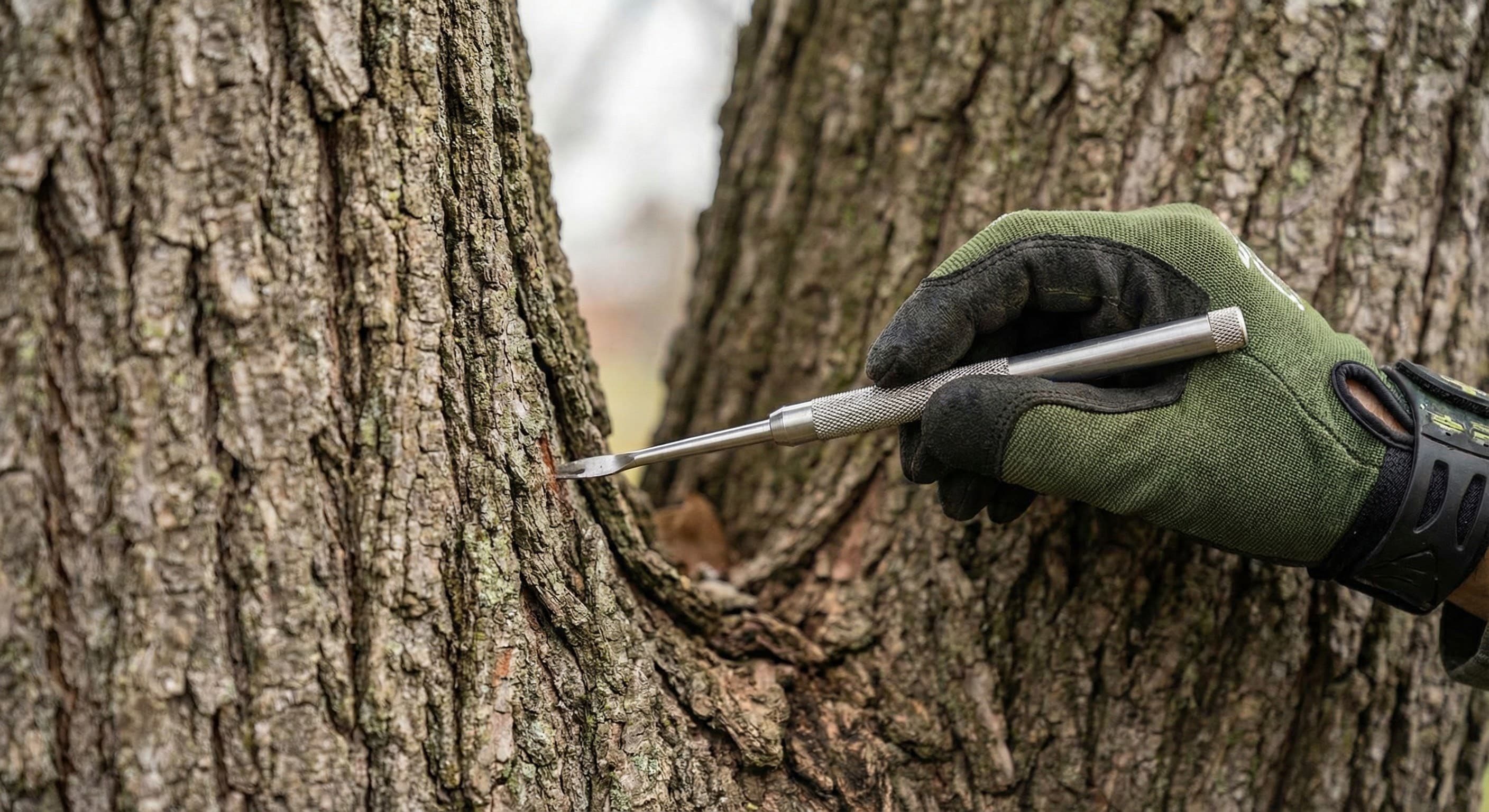
If you own a Post Oak or Blackjack Oak in Smith County, there is a word you need to know: Hypoxylon (pronounced hi-pox-a-lon).
It is one of the most aggressive and common killers of oak trees in East Texas, especially following years of drought like we often experience. Unlike some pests that can be treated, Hypoxylon Canker is a death sentence.
Here is what you need to know to protect your property.
What is Hypoxylon Canker?
Hypoxylon is a fungus that lives naturally on many hardwood trees. In a healthy tree, the tree's natural immune system keeps the fungus in check. It lies dormant, causing no harm.
However, when a tree becomes stressed—usually due to drought, root damage from construction, or soil compaction—the tree's defenses drop. The fungus wakes up and spreads rapidly through the cambium layer (the part of the tree that transports water).
The Signs: Grey/Silver Patches
The most obvious sign of Hypoxylon is the bark peeling off to reveal a smooth, grey, or silver surface underneath. This is the fungal mat (stroma).
- Early Stage: The bark may look brownish or rusty.
- Late Stage: The bark falls off in large sheets, exposing the grey/black fungal layer. It often looks like the tree has been burned or covered in soot.
Once you see these large grey patches on the main trunk, the structural integrity of the wood is already compromised.
Why is it So Bad in Tyler?
Tyler and East Texas have a specific climate cycle: wet springs followed by brutal, dry summers. This cycle, combined with our clay soils, creates perfect storm conditions for tree stress.
- Drought Stress: This is the #1 trigger. When Oaks get thirsty, they get weak.
- Construction Damage: We see this in growing neighborhoods like Hollytree or near fresh developments. Grading the soil or severing roots puts the tree into shock, triggering the fungus.
Can It Be Treated?
No. There is no fungicide that cures Hypoxylon Canker once it has activated.
Once the canker is visible on the trunk, the tree is essentially dead, even if the canopy still has some green leaves. The wood becomes white-rotted and extremely brittle.
The Danger: Hypoxylon-infected trees are unpredictable. They don't always lean before they fall. Heavy branches can snap off without warning on a calm day.
What Should You Do?
- Prevention: The only cure is prevention. Keep your oaks happy. During the dry months (July-September), deep water your established oaks. Avoid damaging roots with construction equipment.
- Removal: If you confirm Hypoxylon on a tree near your house, driveway, or play area, it needs to be removed ASAP. It is a hazardous tree.
Think You Have Hypoxylon?
Don't panic, but don't ignore it. If you see the grey patches, call us for a diagnosis. We can confirm if it's Hypoxylon and help you plan a safe removal before the tree becomes unstable.