5 Signs Your Pine Tree is Hazardous (And Needs Removal)
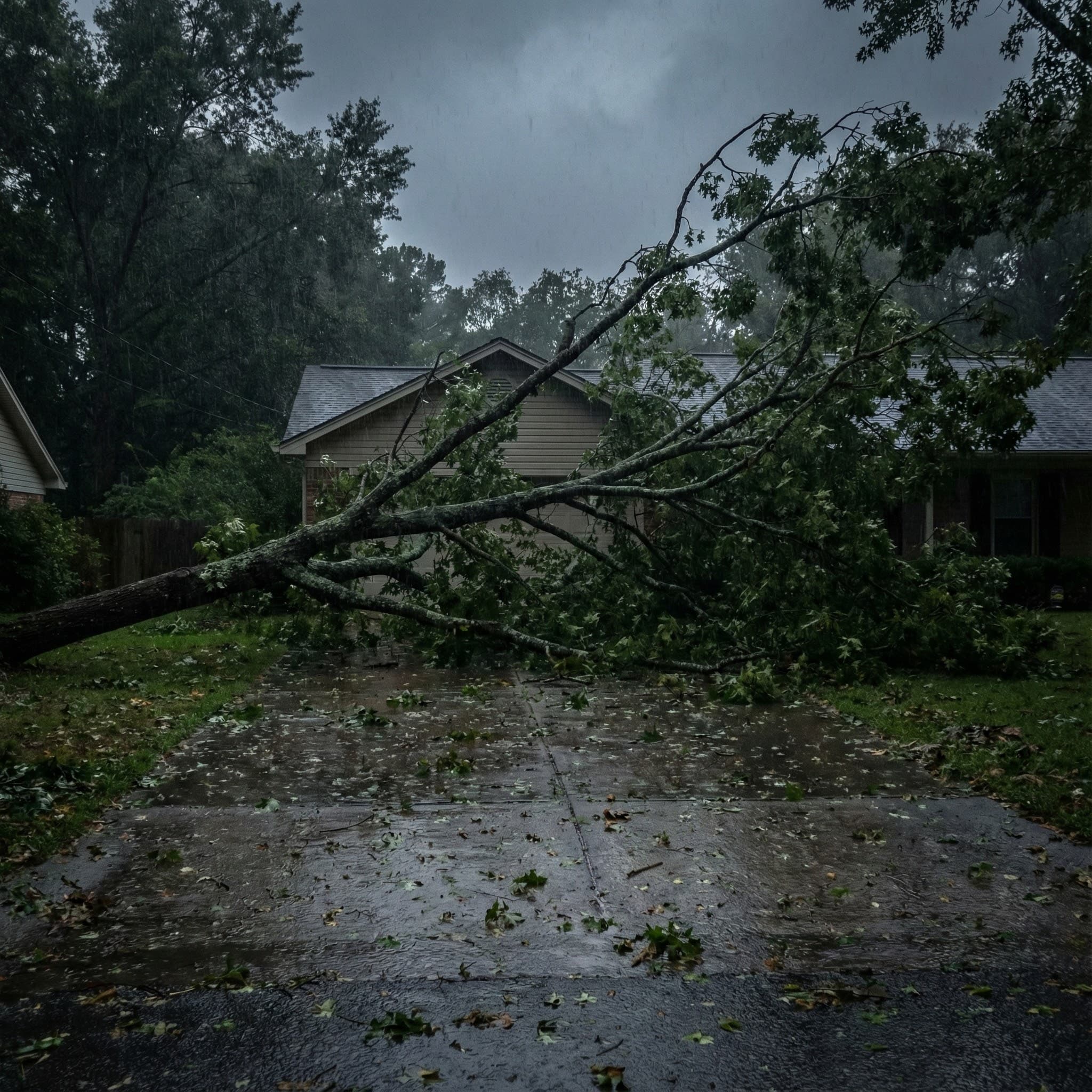
Living in the Piney Woods of East Texas means we all love our towering Loblolly and Shortleaf Pines. They provide shade, beauty, and that signature Tyler aesthetic. But unlike Oaks, which often decline slowly over decades, Pine trees can fail rapidly.
A pine tree that looks healthy today can snap in a storm tomorrow if it has hidden defects. In our years of serving Smith County, we've seen too many homeowners wait until it's too late, resulting in crushed roofs and expensive emergency removals.
Here are the 5 critical signs that your Pine tree is hazardous and needs an immediate assessment by a professional.
1. "Popcorn" on the Bark (Pine Bark Beetles)
If you see small clumps of sap that look like popcorn or white/reddish gum stuck to the outside of the bark, you likely have Pine Bark Beetles.
- What it means: The tree is trying to push the beetles out with sap. If you see these "pitch tubes," the infestation is usually already advanced.
- The Risk: Beetles girdle the tree, cutting off nutrients. The tree dies quickly and becomes brittle. A beetle-killed pine can snap in half unpredictably.
- Action: Call us immediately. If caught very early, we might save it, but usually, immediate removal is required to save your other trees from infestation.
2. Brown Needles (The "Red Flag")
Pines naturally shed old needles (usually the inner ones) in the fall. But if the entire canopy turns brown or red suddenly, or if the tips of the branches are fading to yellow/brown out of season, the tree is dying.
- The "Fade": Foresters call this "fading." Once a pine fades to brown, it is effectively dead. It will not come back green next spring.
- The Risk: Dead pines rot incredibly fast in our humid East Texas climate. Within 6 months, the wood loses structural integrity.
3. Deep Vertical Cracks
Inspect the trunk. Do you see a vertical crack running up the bark?
- Shear Cracks: These can occur from high winds or lightning strikes.
- The Risk: A vertical crack indicates the wood fibers have separated. In the next high wind (and we get plenty in Tyler), the tree is liable to split vertically.
4. The "Lean" (Root Heaving)
All trees lean a little. But if your pine has suddenly developed a new lean, or if you see soil heaving (the ground cracking and lifting) at the base opposite the lean, the roots are failing.
- Root Rot: In Tyler's clay soils, root rot is common during wet springs.
- The Risk: The entire tree could uproot and fall over, root ball and all.
5. Cankers and Fusiform Rust
Look for swollen, elongated galls on the trunk or branches. This is often Fusiform Rust, a fungal disease common in East Texas.
- What to look for: Spindle-shaped swellings that may produce orange spores in spring.
- The Risk: These are weak points. A strong wind will snap the trunk exactly where the canker is located.
Don't Guess with Pines
Pine trees are heavy and tall. When they fall, they do massive damage. If you see any of these signs, do not wait for the next storm season.
Contact Tyler Tree Service today. We provide free, no-obligation safety assessments. We’ll give you an honest answer: if it’s safe, we’ll tell you. If it’s dangerous, we’ll give you a fair price to remove it safely.
Need a Safety Check?
We serve Tyler, Whitehouse, Lindale, and all of Smith County.
Get a Free Assessment